In a judgment dated July 25, 2025, the Eidsivating Court of Appeal ruled that Frogn Municipality had granted unlawful state aid to its wholly owned fitness center, Bølgen Trening. If the judgment stands, it will mark the first time in the Nordics that private actors are awarded compensation for breaches of state aid rules.
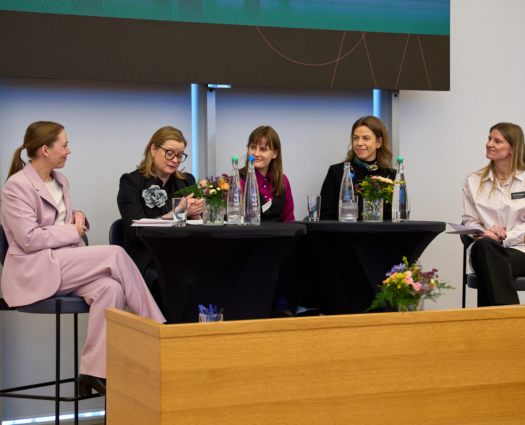
Oslo Economics assisted and worked in close collaboration with Arntzen de Besche, who represented the fitness centers in their case against Frogn Municipality, and with Virke, which supported the fitness centers. Harald Bergh and Arne Gramstad served as expert witnesses appointed by the commercial fitness centers. We provided economic assessments central to the case and calculated the financial losses incurred by the fitness centers as a result of Bølgen Trening receiving state aid. The background of the case was that the municipality had granted subsidies to the fitness center to continue its operations after a period of financial losses.
Unlawful state aid requires several cumulative conditions to be met. In previous proceedings, including before the Supreme Court, it had been established that all conditions were met except one: whether the funds provided by Frogn Municipality represented an economic advantage to Bølgen Trening. In this round of proceedings, the central question was therefore whether Bølgen Trening had obtained an economic advantage.
The judgment clearly states that when a public body acts as the owner of a commercial enterprise, the so-called Market Economy Operator Principle (MEOP) must be applied. This is an assessment of whether a rational private investor would have provided the funds under the same circumstances. If the public body cannot expect a market-rate return on the capital provided to the enterprise, the enterprise cannot obtain the same terms in the market. In that case, the support also provides a genuine economic advantage that a comparable private competitor could not obtain — making the aid liable to distort competition. Such an assessment must be based on realistic assumptions, including realistic budgets for costs and revenues.
The Court of Appeal reached the same conclusions as the experts from Oslo Economics:
- First: The municipality could not expect a market-rate return on the subsidies given to Bølgen Trening.
- Second: Both the costs and revenues of the alternative to continued operations must be considered in the assessment, including the value of existing operating assets that could be sold in the event of liquidation
- Third: When the municipality acts as the owner of a commercial enterprise, it cannot, under the MEOP, consider benefits to other parts of the municipality. That the closure of the fitness center might reduce revenues from the public swimming facility in the same building was therefore not relevant
Harald and Arne also served as expert witnesses for the commercial fitness centers when the case was heard in 2023 by both the Follo and Nordre Østfold District Court and the Eidsivating Court of Appeal.